Mark Carney leans into China to diversify Canada’s trade ties
Prime Minister Mark Carney visited Beijing to deepen economic ties and sign memorandums with China, part of a broader Chinese push to court Western allies amid mounting trade tensions.
Copy link
By Torontoer Staff
Prime Minister Mark Carney visited Beijing this week to press for closer economic cooperation with China, a move Ottawa frames as part of a strategy to reduce overreliance on the United States. Canadian and Chinese officials described the talks as a step toward stabilising relations after years of tension.
Carney’s visit produced several memorandums of understanding covering energy, law enforcement co‑operation and other areas, and set the stage for a meeting with Chinese leader Xi Jinping. Beijing has positioned the trip as part of a broader effort to maintain export markets and court U.S. allies frustrated by American protectionism.
What happened in Beijing
Carney met Chinese Premier Li Qiang at the Great Hall of the People, where both sides pointed to a recent improvement in bilateral ties and emphasised trade opportunities. Ottawa said the discussions covered “challenges impacting international trade and global supply chains, and the opportunities for Canada and China to cooperate.”
The two sides discussed challenges impacting international trade and global supply chains, and the opportunities for Canada and China to cooperate.
statement from the office of Prime Minister Mark Carney
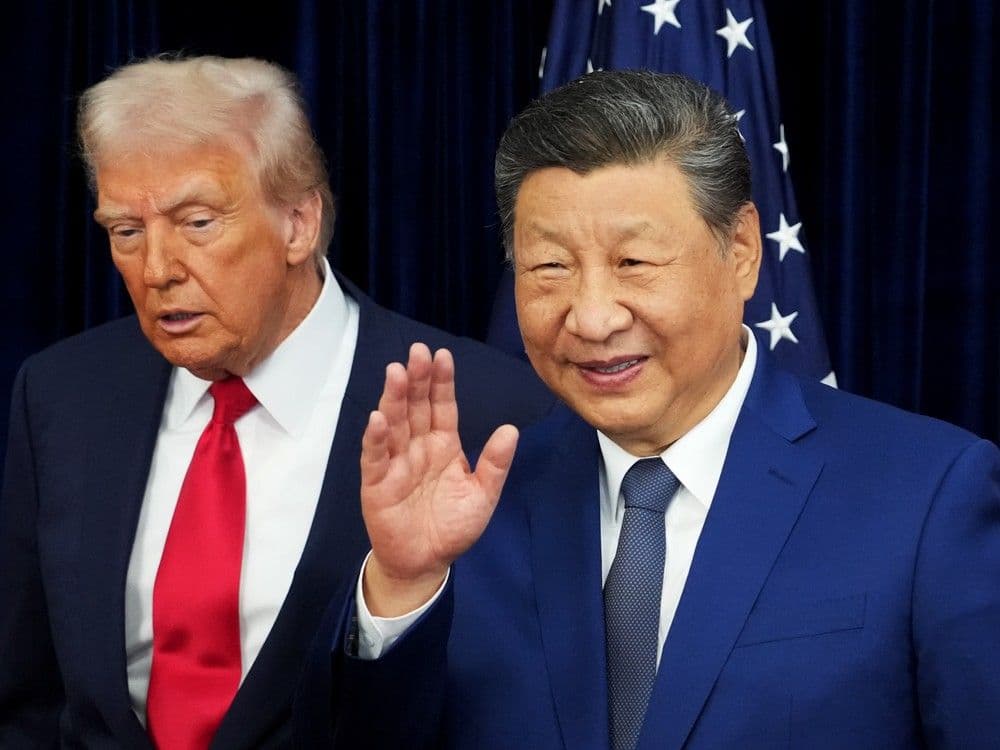
Officials described the memorandums of understanding as providing “the foundation for a new strategic partnership.” Carney is expected to meet Xi Jinping following his talks with the premier. Chinese officials have framed these visits by foreign leaders as evidence that Beijing can offer stability and alternatives to an economic order long dominated by Washington.
Why China is courting Western leaders
China has been actively inviting leaders from U.S. allies for high‑profile visits in recent months, including Emmanuel Macron of France and South Korea’s Lee Jae Myung. Beijing aims to sustain its export markets as global trade barriers rise, and to promote a vision of international influence less centred on the United States.
That charm offensive comes amid record Chinese trade surpluses. Beijing said its global trade surplus approached $1.2 trillion last year. For Canada, two‑way trade with China was about $80 billion over the past 12 months, a figure far smaller than the roughly $1 trillion in commerce between Canada and the United States.
Limits and lingering mistrust
Deep structural and political obstacles mean closer ties with China are unlikely to replace the U.S. as Canada’s main trading partner. Relations with Beijing remain shaped by the fallout from Canada’s 2018 arrest of a Huawei executive on a U.S. extradition request, and China’s subsequent detention of two Canadians until 2021.
Ottawa and Beijing have also been unable to resolve long‑running trade disputes, including Chinese tariffs on Canadian canola seed and Beijing’s duties on Chinese‑made electric vehicles. Senior Canadian officials cautioned before the trip that a quick resolution of those tariffs was unlikely.
- Canada–China two‑way trade: about $80 billion over the past year
- Canada–U.S. trade: roughly $1 trillion over the same period
- China’s reported global trade surplus: nearly $1.2 trillion last year
- Recent bilateral agreements: memorandums on energy and combating crime
The geopolitical context adds further constraints. A U.S. national‑security strategy released under the current administration calls for allies to limit the influence of strategic competitors in the hemisphere, which could complicate Ottawa’s manoeuvring between Washington and Beijing.
The strategy reshapes U.S. expectations of allies, reframes global economic competition, and redefines hemispheric security in ways that will constrain Canada’s policy space with China.
Vina Nadjibulla, Asia‑Pacific Foundation of Canada
Public opinion also matters. Recent Angus Reid polling found only 28 percent of Canadians view China positively, while 59 percent view it unfavourably. The same polling suggested Canadians would prefer Ottawa deepen economic ties with Europe and Mexico rather than with China.
What comes next
Carney’s Beijing trip is intended to signal a pragmatic approach: expand markets and shore up supply‑chain resilience while managing strategic risks. The memorandums provide frameworks for cooperation, but they are unlikely to transform trade balances in the near term.
If Ottawa pursues deeper economic engagement with China, it will need to balance economic benefits against security concerns and domestic political scepticism. The outcome will depend on follow‑through, progress on contentious tariffs and how Washington reacts.
For now, Carney’s visit marks a diplomatic opening, not a realignment. It underscores Canada’s search for additional markets and partners while underscoring the limits imposed by geopolitics and public sentiment.
CanadaChinaMark Carneytradediplomacy