Foreign Minister Anand declines to confirm whether Canada still views China as 'increasingly disruptive'
In Beijing, Foreign Minister Anita Anand would not say if Canada still considers China an "increasingly disruptive" power, signalling a possible policy shift under Prime Minister Mark Carney.

Copy link
By Torontoer Staff
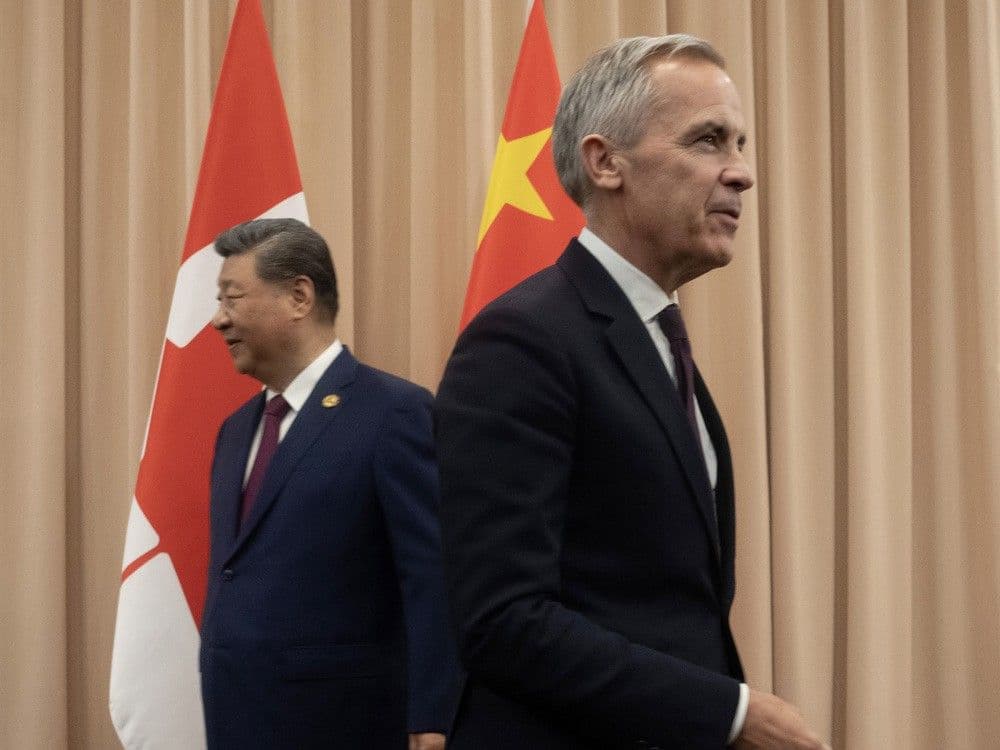
Foreign Minister Anita Anand declined to say on Wednesday whether the Liberal government continues to view China as an "increasingly disruptive" global actor, a refusal that underscores a potential recalibration of Canadian policy under Prime Minister Mark Carney. Her remarks came in Beijing shortly after Carney arrived for high-level talks and a first official visit with senior Chinese leaders since 2017.
Anand repeatedly avoided endorsing the 2022 Indo-Pacific strategy's assessment of China when pressed by reporters, saying the new government has introduced a different foreign policy and emphasising economic priorities, including diversifying trade away from heavy reliance on the United States.
Anand refuses to restate 2022 language
Reporters in Beijing asked Anand whether Ottawa still stood by the strategy that described China as "an increasingly disruptive global power" that "increasingly disregards" international rules and norms. Each time, she declined to confirm that characterization, instead framing the discussion around the government's agenda and economic goals.
"Mr. Carney's election brought in a new government with a new foreign policy," she said, adding that "in this moment of economic stress for our country, it is necessary for us to diversify our trading partners and to grow non-U.S. trade by at least 50 per cent in the next 10 years."
Foreign Minister Anita Anand
Trade negotiations and market access on the agenda
Both Ottawa and Beijing signalled a focus on economic issues during Carney's visit. Anand said the government has been working for months to remove trade irritants, naming Chinese tariffs on Canadian canola as a priority. She also acknowledged that Beijing will seek concessions on Canadian tariffs applied to electric vehicle imports, which Ottawa imposed to protect domestic auto manufacturing.
"The conversation has been productive, the negotiations are still continuing," Anand told reporters. "We are here to represent all sectors of the Canadian economy."
Foreign Minister Anita Anand
Carney received a warm reception on arrival, including greetings from both countries' ambassadors and a brief ceremonial exchange. The reception illustrated Ottawa's desire to reset ties while pursuing concrete trade outcomes.
- Thursday: Carney is scheduled to meet Zhao Leji, Chairman of the Standing Committee of the National People's Congress
- Thursday evening: a meeting and dinner with Chinese Premier Li Qiang
- Agenda items: trade disputes including canola tariffs, electric vehicle tariffs, and broader economic cooperation
What a policy shift would mean
A softening of public rhetoric would mark a notable change from the Indo-Pacific strategy, which balanced criticism of Beijing's behaviour with a recognition of major commercial opportunities and the need to cooperate on global challenges such as climate change, global health and nuclear proliferation.
Analysts say a redefined stance could accelerate efforts to expand non-U.S. markets for Canadian exporters, but it could also raise questions about how Ottawa will address concerns about human rights, security and adherence to international norms.
The incoming government faces a trade-off between economic objectives and strategic alignments. Officials are weighing immediate benefits from improved market access against longer term commitments to allies and multilateral norms.
Signals from Beijing and next steps
Chinese officials welcomed Carney and his delegation, a signal China values the reset. Ottawa will now test the balance between accommodation on trade and maintaining clear positions on governance and international rules.
Following meetings in Beijing, Ottawa's public statements and any adjustments to the Indo-Pacific strategy will provide clearer evidence of whether Canada is redefining its public characterisation of China or simply prioritising economic diplomacy while retaining previous assessments in other forums.
For now, Anand's refusal to repeat the 2022 language leaves the government's posture ambiguous, even as it pursues concrete trade outcomes during a high-profile visit.
ChinaAnita AnandMark CarneyIndo-Pacific strategytrade