Carney arrives in Beijing to pursue trade deals and repair frayed ties
Prime Minister Mark Carney visits China and Qatar to prioritise exports and investment, signalling a clear trade-focused shift in Canadian foreign policy.
Copy link
By Torontoer Staff
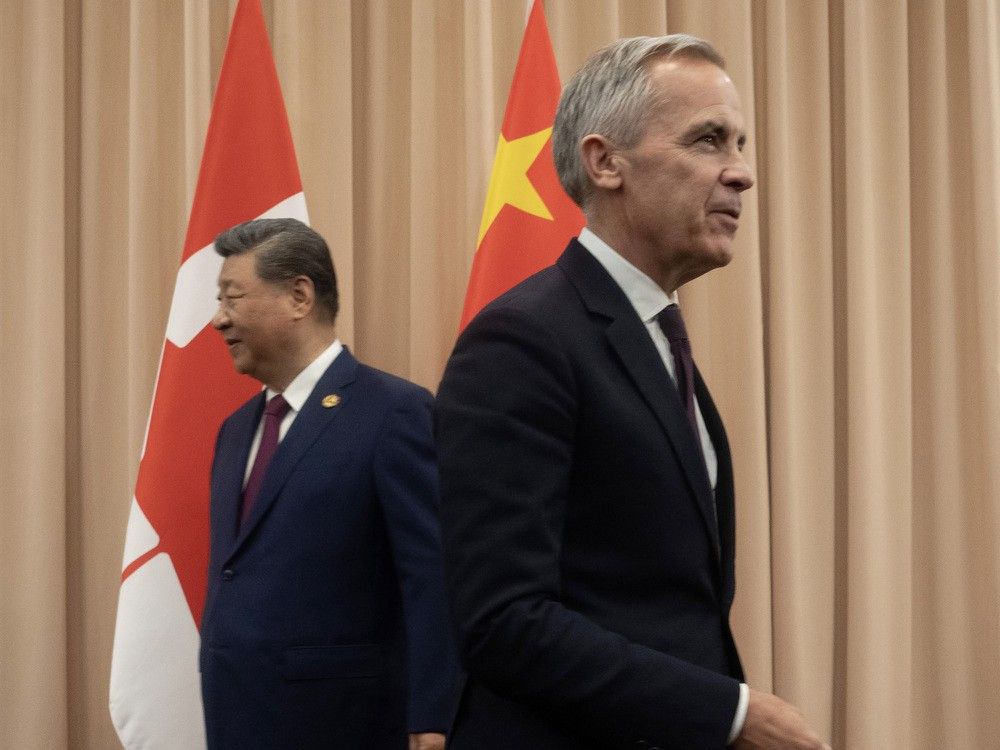
Prime Minister Mark Carney arrived in Beijing on Wednesday for his first visit to China by a Canadian prime minister since 2017, beginning a diplomatic mission aimed at restoring bilateral ties and securing trade and investment. The trip, which also includes a stop in Qatar and could include India later, underscores a foreign policy that places economic priorities ahead of the social and human rights themes advanced during the Trudeau years.
Foreign policy specialists and former officials say the itinerary removes any doubt that Ottawa has pivoted toward a trade-first approach as it seeks to replace lost exports after U.S. tariffs and to meet a government target of doubling non-U.S. exports within a decade.
A clear trade-first pivot
Carney signalled the shift quickly after the April election. His May mandate letter prioritised a stronger economy in both domestic and foreign policy, and made no reference to the feminist foreign policy language that marked Justin Trudeau’s government. In October he set a goal to double exports to non-U.S. markets over the next decade, a move Ottawa says could add about $300 billion in trade.
Analysts say the change reflects both political priorities and immediate economic pressure from tariff-driven export losses to the United States. "I think there’s absolutely been a sharp turn since Carney has been in power," said Thomas Juneau, an international affairs specialist at the University of Ottawa.
I think there’s absolutely been a sharp turn since Carney has been in power.
Thomas Juneau, University of Ottawa
Former diplomat Fen Hampson summarised the practice of the new government succinctly. "Every trip he’s made abroad has been to hustle up more business for Canada," Hampson said, pointing to Carney’s early visits to the United Arab Emirates and his attendance at the G20 in Johannesburg as examples of a commerce-driven calendar.
Every trip he’s made abroad has been to hustle up more business for Canada.
Fen Hampson, Carleton University
China: deep structural challenges remain
Carney’s visit to Beijing will confront decades-long friction that predates the Trudeau era and intensified after high-profile incidents. The 2018 arrest in Vancouver of Huawei executive Meng Wanzhou, and the subsequent arbitrary detention of Canadians Michael Kovrig and Michael Spavor, left a legacy of mistrust that diplomacy must overcome to restore robust commercial ties.
Trade disputes add further complexity. Ottawa followed U.S. and other partners in imposing 100 per cent tariffs on Chinese-made electric vehicles in 2024. China retaliated with steep duties on key Canadian agricultural exports, including canola and pulses, a move that removed important markets for Canadian producers.
Observers say a comprehensive trade breakthrough is unlikely without meaningful concessions on market access for Chinese EVs, an outcome complicated by Canadian industry concerns over subsidies and dumping, and by the risk of triggering a response from the United States and Mexico during an ongoing review of North American trade rules.
Canada has absolutely zero influence on (anybody’s) human rights’ record.
Thomas Juneau, University of Ottawa
Gulf states and Qatar: easier paths to investment
Carney’s stops in the UAE and Qatar reflect a more straightforward commercial logic. Wealthy Gulf states have capital to deploy in energy, infrastructure and large-scale projects that match Canadian needs, particularly for energy infrastructure and private investment in major projects.
During his UAE visit last year, Carney signed agreements to boost trade and investment and met senior leaders. Doha offers similar opportunities, and Ottawa hopes to attract financing and technical partnerships for Canadian energy projects and pipelines.
- Restore diplomatic ties with China to reduce trade frictions
- Secure Gulf investment for energy and infrastructure projects
- Expand non-U.S. export markets to meet the government’s doubling target
Domestic drivers, limits and geopolitical trade-offs
Policy choices are constrained by the structure of Canadian trade and by Washington’s influence. In 2024, about 76 per cent of Canadian merchandise exports went to the United States, while roughly 4.1 per cent were bound for China. That imbalance means Ottawa must weigh the benefits of deeper engagement with new partners against potential friction with the United States.
Carney’s government is also relying on domestic measures, including infrastructure spending and higher defence procurement, to attract investment and diversify export markets. "We will have to do more business," said Tyler Meredith, a former senior policy adviser in the Trudeau government, speaking to the urgency behind the current push.
We will have to do more business.
Tyler Meredith, former Trudeau government adviser
Not all former officials agree that the new emphasis marks a sharp departure from Trudeau-era priorities. Senator Peter Boehm, chair of the Senate committee on foreign affairs, said the focus on trade and investment has long been part of Canadian foreign policy and that the difference since Carney is largely an increased emphasis on non-American markets because of recent disruptions.
The current focus on trade and investment hasn’t changed that much from the Trudeau years.
Sen. Peter Boehm
Conclusion
Carney’s visit to Beijing and Qatar is the first major test of a government intent on prioritising commerce in its external relations. Officials and analysts say the agenda is clear, but outcomes are uncertain. Restoring market access in China, attracting Gulf capital, and avoiding unintended consequences with the United States will determine whether the mission delivers tangible economic gains.
Mark CarneyChinatradeforeign policyexports