Mark Carney launches China visit with a string of trade renewals focused on energy and clean tech
Carney signed a set of mostly non-binding agreements with Chinese leaders to revive trade ties in oil, gas, uranium and green technology, while key disputes remain unresolved.
Copy link
By Torontoer Staff
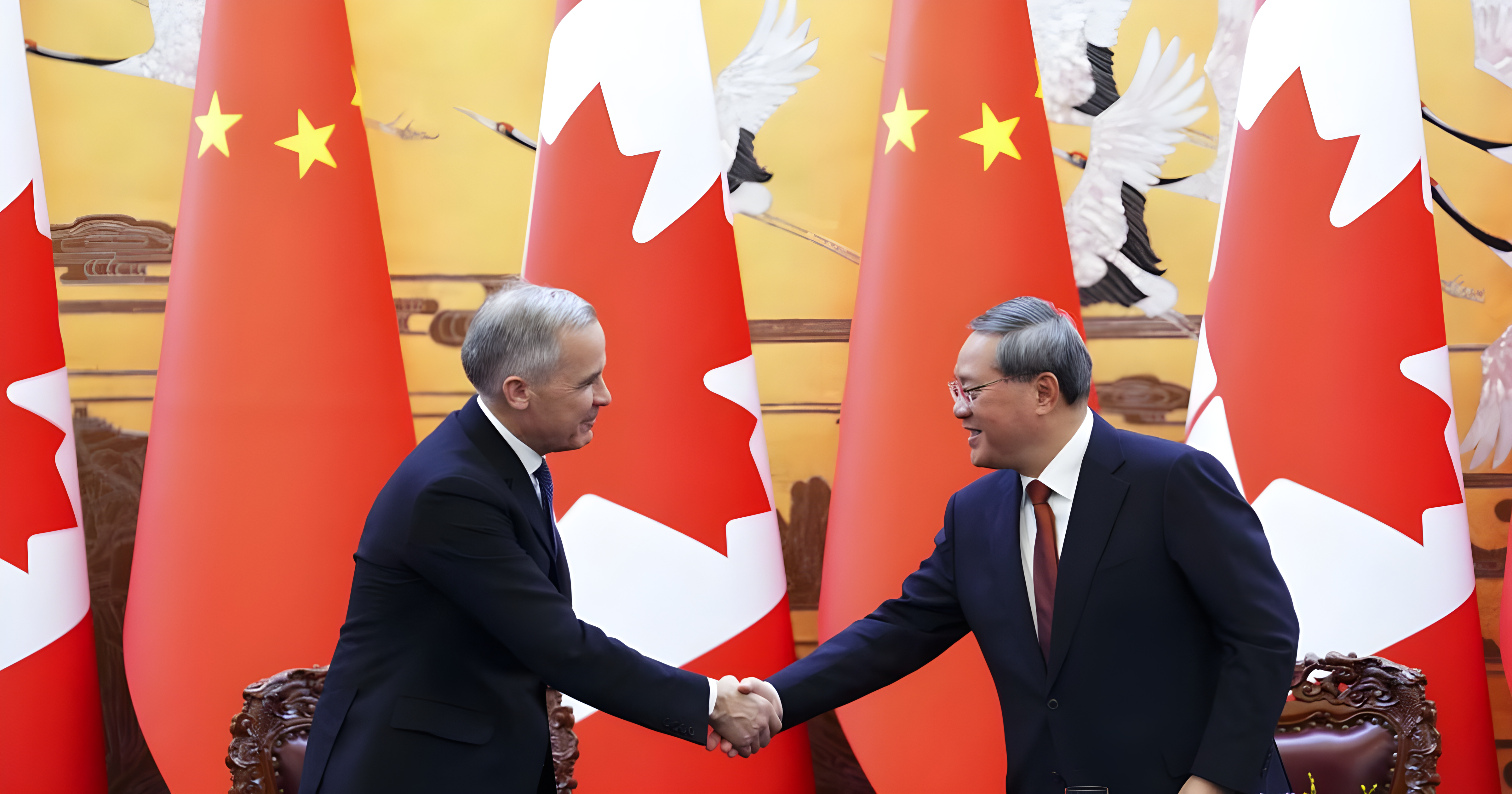
Mark Carney opened his trade mission to China by signing a series of agreements and declarations intended to restore business ties after years of diplomatic strain. The documents, most of them non-binding renewals, target energy trade, clean technology, cultural exchange and other practical barriers to commerce.
Canadian officials described the visit as the start of a renewed strategic partnership with Beijing, and said the deals signal a return to business-focused engagement even as several outstanding trade disputes remain unresolved.
What was signed
Carney and Chinese Premier Li Qiang witnessed six agreements and two declarations, with ministers from both countries signing sector-specific memorandums of understanding. Ottawa framed the package as practical steps to increase trade and reduce regulatory barriers, though most items are not legally binding.
- Energy cooperation covering crude oil, liquefied natural gas, liquefied petroleum gas and uranium
- Renewed talks on Chinese imports of green energy technology, including batteries and grid storage
- Culture and people-to-people exchanges
- Construction lumber cooperation
- Agreements on combating crime and law enforcement co-operation
- Measures to ease regulatory barriers on pet food
These deals will provide benefits to each nation’s people, but also provide an example to the world of co-operation amidst a time, globally, of division and disorder.
Mark Carney
Energy and clean technology in focus
Energy was the clearest priority for both sides. The energy memorandum sets out a mutual objective to increase Canadian exports of oil, gas and uranium, alongside greater Chinese exports of renewable energy equipment and storage solutions. Ottawa highlighted potential commercial opportunities and technology transfer.
Energy Minister Tim Hodgson flagged Chinese interest in Canada’s oilsands while emphasising Canadian appetite for Chinese clean-energy innovation. He pointed to established Chinese involvement in Canada and to technologies that can stabilise renewable power systems.
They have some of the world’s very best grid storage solutions that turns intermittent renewable energy into base load energy.
Tim Hodgson
Ottawa singled out Contemporary Amperex Technology, known as CATL, as an example of a Chinese company whose grid storage and battery work could be relevant to Canada’s energy transition. CATL already participates in large-scale storage projects in Ontario.
Diplomatic context and outstanding issues
Chinese leaders framed the visit as a turnaround in bilateral relations, describing a renewal of a strategic partnership. Carney met first with Zhao Leji, chairman of the standing committee of the National People’s Congress, and later with Premier Li. Beijing pledged support for Canada’s bid to host the Asia-Pacific summit in 2029.
Not all tensions were resolved. China has maintained counter-tariffs on Canadian canola, and there was no indication China would remove those measures. Ottawa also faced questions about whether it will relax tariffs on electric vehicles to win concessions, a matter that may surface when Carney meets President Xi Jinping later in the visit.
The goal is to work with China at a time when the world is full of disruption, and now, there are several countries that are more disruptive and so the goal of Canada is to work with different countries.
Mélanie Joly
In public remarks, Industry Minister Mélanie Joly framed the outreach as a response to global protectionism and a desire to diversify trade partnerships beyond any single market.
Business meetings and bilateral gestures
Carney’s delegation included five cabinet ministers and senior business leaders. He held private talks with executives from China National Petroleum Corporation, the Industrial and Commercial Bank of China, CATL, Alibaba and other major firms. The Prime Minister’s Office did not release detailed readouts of those meetings.
The Canadian delegation received formal receptions at the Great Hall of the People. The prime minister presented gifts including a spalted birch wood sculpture from British Columbia and a muskox horn carving described by the PMO as symbols of renewal and partnership.
Ministers signed several of the sector agreements in public. The session included a light-hearted moment when the agriculture minister held a document upside down before the customary handshake, drawing laughter from participants.
What comes next
Carney’s visit is primarily transactional, focused on reopening lines of commerce and attracting Chinese investment into Canadian energy and technology projects. The visit’s longer-term impact will depend on whether the meetings with President Xi produce concrete movement on tariffs and regulatory disputes.
Ottawa and Beijing have taken a first step toward resumed co-operation, but critical trade irritants remain. The outcome of the prime minister’s meeting with Xi, scheduled later in the trip, will be the most telling indicator of how far the renewed partnership can go.
Canada-China relationsMark Carneytradeenergyclean-technology