China’s 2025 trade surplus hits a record US$1.2 trillion as exports surge
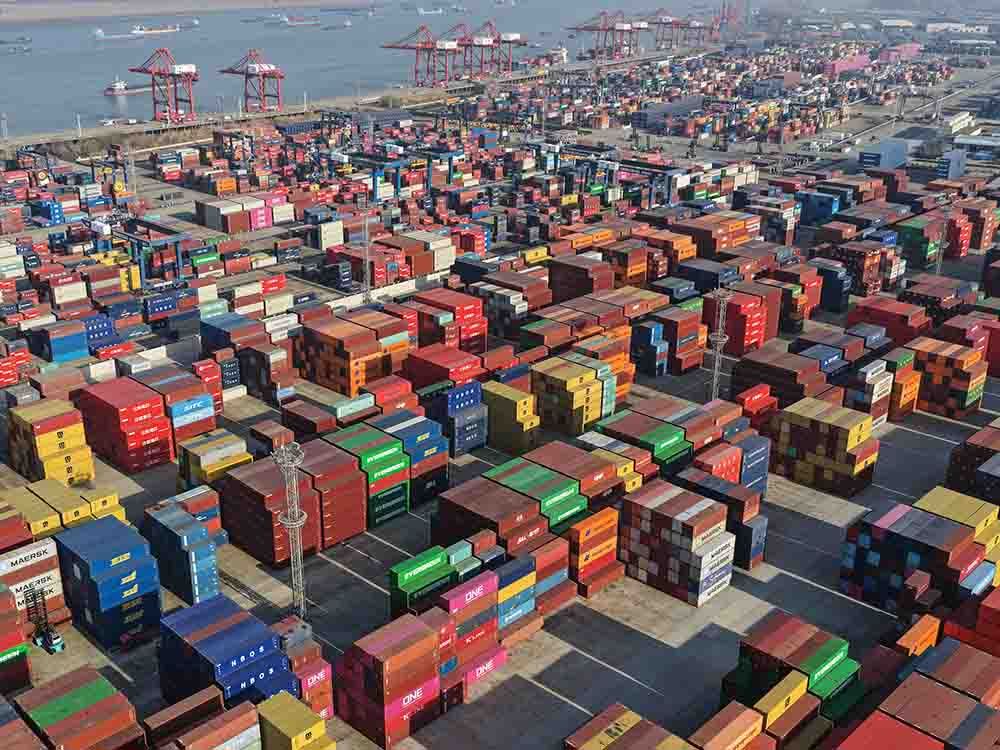
China posted a record US$1.2 trillion trade surplus in 2025 as exports of semiconductors, cars and ships jumped, offsetting weaker domestic demand amid rising global protectionism.
Copy link
By Torontoer Staff
China posted a record US$1.2 trillion trade surplus in 2025, driven by a sharp rise in exports of higher-value goods even as U.S. tariffs and global trade tensions persisted. Official data showed December exports rose 6.6 percent year on year, the fastest pace in three months and stronger than economist forecasts.
The surprise export resilience helped cushion an otherwise fragile economy, as weak domestic demand, a prolonged property downturn and falling investment continued to limit imports.
Where the surplus came from
Higher-end manufacturing led the rebound. Shipments of semiconductors, cars and ships each climbed more than 20 percent from a year earlier, while many lower-end goods such as toys, shoes and clothing contracted. The combined growth in exports to Southeast Asia and Europe offset a deepening fall in sales to the United States.
The balance on goods and services, or current account surplus, was estimated by the International Monetary Fund at 3.3 percent of GDP for 2025, a level not seen since China’s export boom around 2010.
How exports grew despite tariffs
Several structural and cyclical factors helped sustain exports. Manufacturers moved further up the value chain, boosting sales of sophisticated components. Chinese investment in overseas factories has expanded demand for parts, machinery and equipment made in China. At the same time, domestic weakness and deflation pushed the yuan lower in inflation-adjusted terms, making Chinese goods more price competitive abroad.
We expect export resilience to extend into this year, with exports remaining an important growth driver and partially offsetting weaker domestic demand.
Barclays economists including Ying Zhang
Domestic implications and policy choices
The growing reliance on external demand highlights a persistent imbalance between China’s manufacturing strength and weak consumer spending at home. Lower imports for items such as crude oil reflected subdued investment and consumption. That dynamic reduces urgency for Beijing to deploy large stimulus measures.
Analysts at Nomura expect major stimulus to be delayed until the second quarter of 2026. Citigroup economists have suggested policymakers may also defer cuts to policy interest rates or to lenders’ reserve requirement ratios if external demand continues to carry growth.
Tensions abroad and policy responses
Rising surpluses have stirred pushback from trading partners. China has taken steps to ease tensions by reducing export tax rebates for hundreds of products, including solar cells and batteries. The European Union is considering measures such as a minimum price for Chinese electric vehicles to replace import tariffs.
New U.S. tariff measures related to trade with Iran add another layer of uncertainty. Those policies could complicate the informal truce in U.S.-China trade relations and prompt further shifts in supply chains.
The external environment for China’s trade development is still grim and complex. With more diversified trading partners and strengthened resilience, the fundamentals of China’s trade remain solid.
Wang Jun, deputy head of the customs authority
Some economists say political friction will increase as China’s higher-end products gain market share. Lynn Song, chief economist for Greater China at ING, warned of "some pushback" as competitiveness rises.
What this means for businesses and global markets
- Exporters of advanced manufactured goods may find continued demand outside the U.S., especially in Europe and Southeast Asia.
- Import-dependent Chinese industries will face headwinds as weak domestic demand keeps imports subdued.
- Policymakers may delay broad stimulus or major monetary easing if external demand remains strong.
- Trade tensions and new tariffs could still disrupt supply chains and add volatility to global markets.
A high comparison base from last year means growth rates could slow in the months ahead. Geopolitical fragmentation and weaker global growth are additional headwinds for China’s trade outlook in 2026.
For now, exports are doing the heavy lifting, but the gap between external strength and domestic weakness presents a policy dilemma for Beijing and a source of tension for trading partners.
Chinatradeexportseconomytariffs