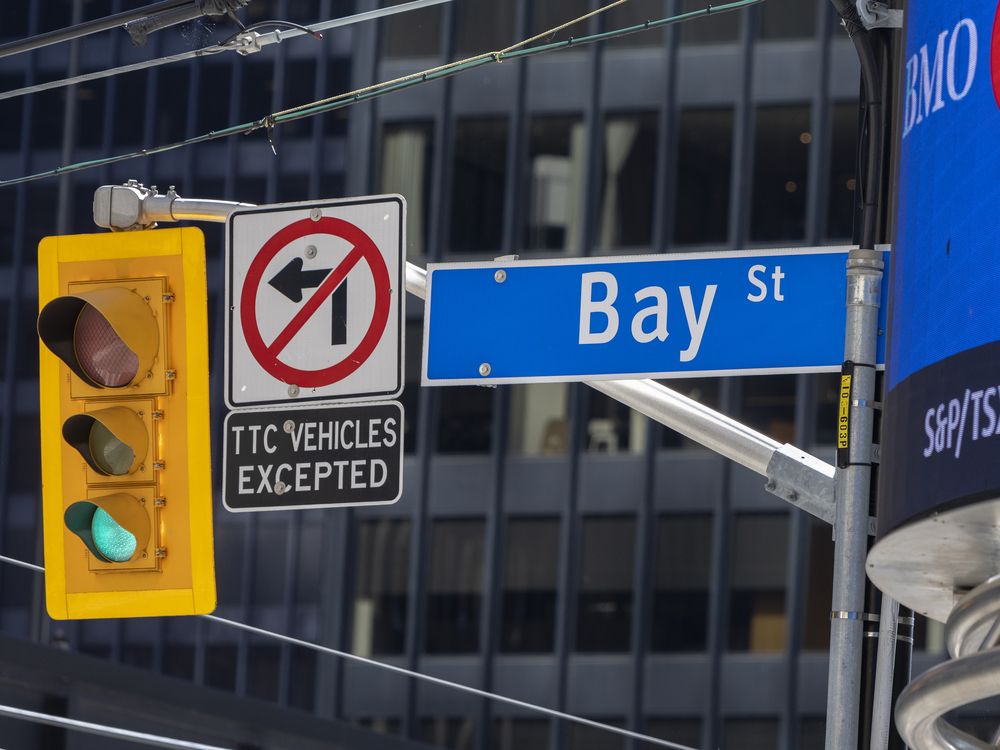
Bay Street firms helped companies and governments raise roughly $597 billion in 1,133 deals during 2025, the largest annual total in 15 years and an eight per cent increase from 2024.
The surge came amid trade and geopolitical shocks, including U.S. tariff moves, but many Canadian exporters benefited from exemptions under CUSMA that limited the direct impact on the equity market.
What drove the surge
Deal activity in 2025 did not hinge on a single theme. Banks and advisers point to a mix of interest in artificial intelligence, a strong mining cycle, opportunistic M&A and heavy secondary market activity. Secondary offerings were unusually prominent. Restaurant Brands International raised $1.7 billion in November, and GFL Environmental completed two large secondary offerings, raising $1.29 billion and $1.06 billion during the year.
It was a bit of everything that drove dealmaking last year as opposed to one reason that could be applied across the board.
Rosalind Hunter, co-chair, Osler, Hoskin & Harcourt LLP’s Capital Markets Group
Debt and equity markets: records and rebounds
Corporate debt issuance hit a 15-year high at $301.5 billion as issuers locked in attractive funding costs. Equity issuance rebounded sharply to $35.2 billion, up 97.3 per cent from 2024, reversing several years of subdued share sales.
Issuers also included a record number of inaugural bond borrowers, more than 50 new names compared with nine in 2023. Telecom liability-management activity returned cash to the market that investors had to redeploy, which helped support issuance across sectors.
Few people at that time would have predicted that we would rebound as quickly as we did.
Rob Brown, co-head, Canadian Debt Capital Markets, RBC Capital Markets
Corporate balance sheets are in robust shape, which gives investors a lot more comfort around being invested in credit.
Abeed Ramji, head of Debt Capital Markets, TD Securities
Big deals and sector winners
Materials and mining dominated equity issuance. Mining-related deals made up 45 per cent of equity volumes in 2025, and the materials sector completed 293 deals raising $13.05 billion, its best year in a decade. The energy sector also had a stronger year, led by Keyera Corp.'s $2.1 billion equity raise to fund a major asset purchase.
Deals in the mining sector made up 45 per cent of the equity issuance volumes in 2025.
Jackie Nixon, head of Canadian Equity Capital Markets, RBC Capital Markets
- Keyera Corp., $2.1 billion equity raise
- Restaurant Brands International, $1.7 billion secondary offering
- GFL Environmental, $1.29 billion and $1.06 billion secondary offerings
- Carcetti Capital takeover of Barrick’s Hemlo mine, about $1 billion
Who led the market
Canada’s biggest dealers captured the largest share of issuance. RBC Capital Markets participated in the most deals and arranged $84.43 billion, about 14.1 per cent of the total. TD Securities followed with $63.6 billion. Other active dealers included BMO Capital Markets, CIBC World Markets, National Bank Financial and Scotia Capital.
The strong role of banks and advisory teams matters to Ottawa, which is seeking more private capital to fast-track major energy and mining projects aimed at boosting investment and reducing reliance on the United States.
Outlook for 2026
Analysts expect 2026 to start from a high baseline but to be shaped by policy and geopolitics. A stable central-bank backdrop from the Bank of Canada and the U.S. Federal Reserve would support new-issue activity, while developments around trade, CUSMA negotiations and global commodity competition could change market tone.
The health of the economy, effectiveness of pro-growth government policies, central bank positioning and geopolitical developments will likely influence market tone and dealmaking activity in 2026.
Rob Brown, co-head, Canadian Debt Capital Markets, RBC Capital Markets
There are still structural challenges for homegrown public companies. Law firms and advisers warn that Canada must improve tax and incentive systems to help firms achieve the scale needed to thrive on public markets.
The real issue is not being able to create an environment that supports Canadian companies.
Rosalind Hunter, co-chair, Osler, Hoskin & Harcourt LLP’s Capital Markets Group
For now, Bay Street’s 2025 performance shows resilient appetite for long-term funding, with strong debt markets, a revived equity pipeline led by mining and a slate of large secondary and strategic transactions driving the most active year for capital raising in over a decade.